






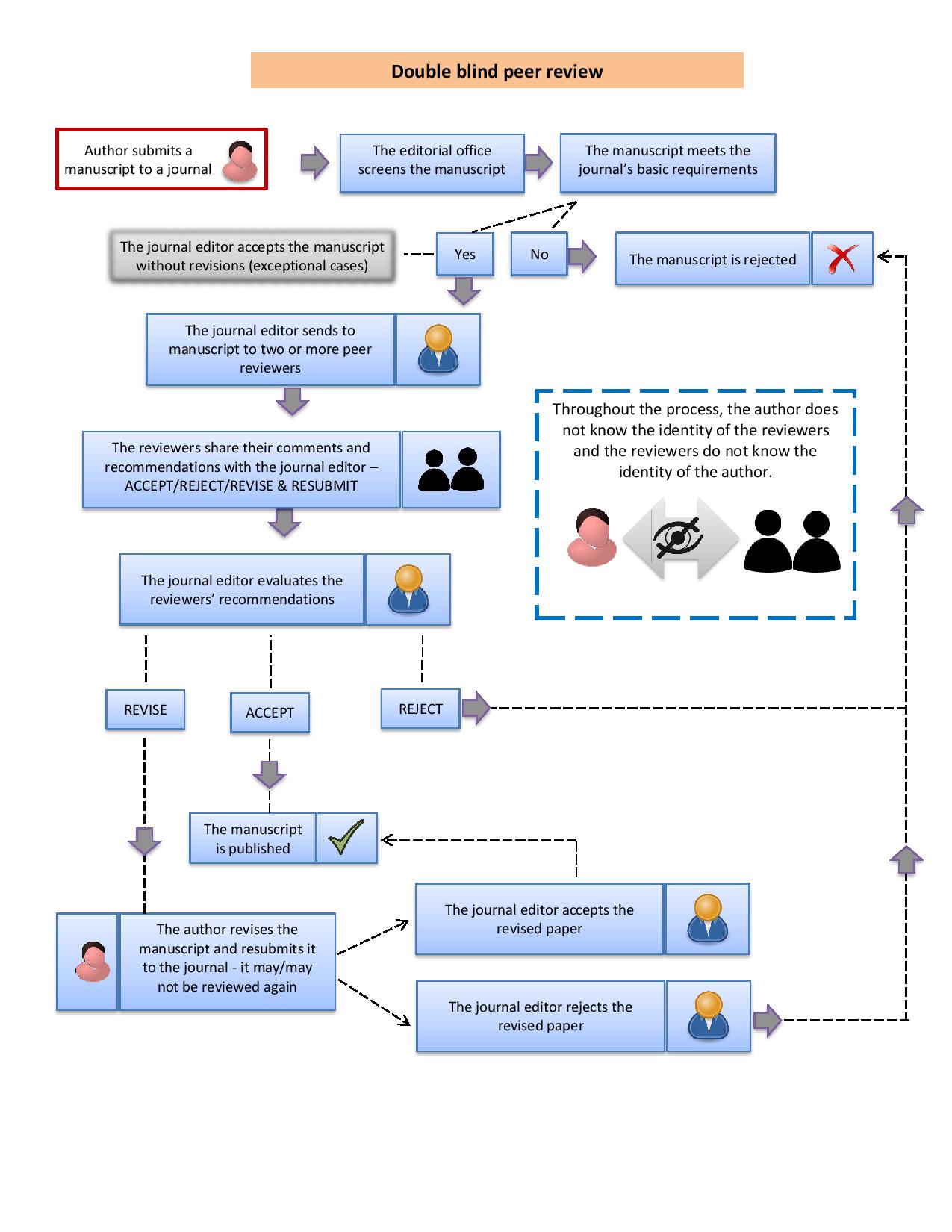
In Ethiopian International Journal of Multidisciplinary Research double-blind peer-review process has been followed since 2019. After the initial green signal by the editor, the papers are sent to suitable reviewers. The article may be sent to more than 2 or more reviewers. Average time from submission to a final decision: 30 days
Double-Blind Peer Review – The Definition
In the Double-blind peer review, the identity of both the author and reviewer is kept secret. This mainly stops the reviewer from forming any partiality as the reviewer doesn’t know who wrote the article.
To aid this the authors need to make sure that their manuscripts are created in a way that doesn’t reveal their identity at any cost.
But as no process is entirely useful or harmful, the Double-Blind Peer Review also comes with its set of advantages and disadvantages. Let’s now discuss them in detail.
Advantages of Double-Blind Peer Review System
Ethiopian International Journal of Multidisciplinary Research is international, evaluated by experts of the journal which publishes high-quality, unique research contributions toward scientific knowledge. Every manuscript submissions are the focus of an initial assessment by the Editor, as well as if found appropriate for more reflection, peer review by independent, anonymous proficient referees. Every peer review is double-blind as well as the submission is online by the use of ScholarOne Manuscripts.
The Ethiopian International Journal of Multidisciplinary Research (EIJMR) brings together scholars and researchers from the following countries:
 Azerbaijan
 Türkiye
 Uzbekistan
 Kazakhstan
 Turkmenistan
 Kyrgyzstan
 Republic of Korea
 Japan
Japan India
India United States of America
 Kosovo
This international representation reflects the journal’s commitment to global academic cooperation and multidisciplinary research exchange.
